
| Article Information | |
|---|---|
| Last Updated | 28 Aug 2026 |
| Reviewed By | Techziano Editorial Team |
| Reading Time | 12 Minutes |
| Testing Method | Official Specs + Independent Reviews |
The iPhone 17 Pro Max doesn’t win people over with a ridiculous megapixel number.
It wins by making more of the camera system useful.
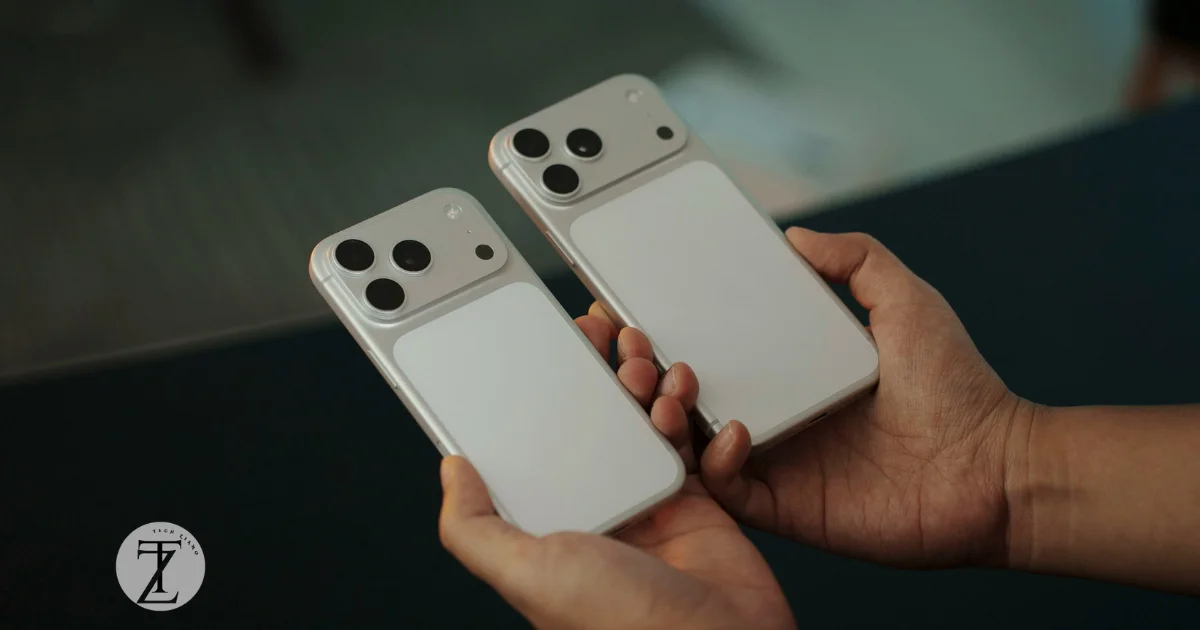
Apple has moved the iPhone 17 Pro Max to a triple-48MP rear camera setup, upgraded the telephoto system and introduced an 18MP Center Stage front camera. The telephoto camera is the particularly interesting change: its larger sensor enables up to 8x “optical-quality” zoom, giving the Pro Max considerably more reach than the previous generation.
But specifications only tell part of the story.
The real question for an iPhone 17 Pro Max camera is much simpler:
Does this actually make it a better camera for the photos and videos people take every day?
After looking at Apple’s camera changes alongside independent testing, I think the answer is yes — but not in exactly the way you might expect.

iPhone 17 Pro Max camera specs
| Camera | iPhone 17 Pro Max |
|---|---|
| Main | 48MP |
| Ultra-wide | 48MP |
| Telephoto | 48MP |
| Maximum optical-quality zoom | 8x |
| Front camera | 18MP Center Stage |
| Video | Up to 4K at 120fps |
| Macro | Yes |
| Dual Capture | Yes |
The major story here isn’t simply that Apple has put 48MP sensors everywhere.
It’s what Apple can do with all that image data.
The new telephoto camera, for example, uses a sensor reported as 56% larger than its predecessor and supports up to 8x optical-quality zoom.
That is a much more meaningful upgrade than simply increasing the megapixel count.
The telephoto camera is the biggest upgrade
If there’s one part of the iPhone 17 Pro Max camera system I’d pay attention to, it’s the telephoto.
Previous Pro Max models already had excellent zoom capabilities, but Apple has pushed the system further this generation.
The 48MP telephoto camera gives the phone a native 4x optical perspective while allowing Apple to produce an 8x “optical-quality” mode. Apple equates that longer view to a 200mm lens.
And independent testing suggests the change isn’t merely marketing.
TechRadar’s testing found the 4x and 8x modes particularly useful for both close subjects and distant scenes. The reviewer also noted that optical stabilization helped keep the longer telephoto framing steady.
PhoneArena’s testing similarly found the new zoom camera to be the most significant camera upgrade, particularly in detail and noise handling.
Why does this matter?
Because zoom is where smartphone cameras often become frustrating.
At 1x, most flagship phones can produce excellent photographs.
Move further away from the subject and the differences become much easier to see.
That’s why I think Apple’s decision to improve the telephoto hardware is more interesting than another headline about computational photography.
The camera is becoming more versatile rather than simply more impressive on a specification sheet.

Main camera: still the camera you’ll use most
The 48MP main camera remains the workhorse.
And that’s exactly how it should be.
Most people aren’t walking around taking everything at 8x. They’re photographing food, friends, pets, buildings, documents, cars and whatever happens to catch their attention.
This is where Apple’s image processing continues to matter.
TechRadar found the iPhone 17 Pro Max capable of producing detailed photographs with natural-looking color and strong image processing.
That’s a pattern also reflected in other testing.
The important thing isn’t that every photograph looks dramatically different from an iPhone 16 Pro Max.
It doesn’t.
The more useful improvement is consistency.
The main camera is already operating at a very high level, so the gains are now about handling difficult situations without requiring you to think about the camera.
That’s something specifications don’t really communicate.
What happens when you use the ultra-wide camera?
The ultra-wide camera has also moved to 48MP, which gives Apple considerably more image data to work with.
It also doubles as the macro camera.
In good lighting, independent testing suggests the ultra-wide produces strong results, although image quality naturally becomes more challenging as the light falls.
This is worth remembering when comparing smartphone cameras.
A phone can have three cameras with impressive specifications and still produce visibly different results between them.
The real test is lens consistency.
You don’t want your 1x photo looking excellent, switching to ultra-wide and suddenly getting softer detail, different colors and weaker dynamic range.
The iPhone 17 Pro Max gets closer to making the three rear cameras feel like one coherent system.
That’s arguably more valuable than having a camera that produces one spectacular photograph under perfect conditions.

Low-light photography is where the upgrades become easier to appreciate
Night photography has become one of those areas where flagship phones are all remarkably capable.
The iPhone 17 Pro Max still has an advantage in the way it handles difficult scenes, but it’s important not to oversell the difference.
TechRadar’s testing found night photography improved, with the 8x telephoto proving useful even for distant nighttime subjects.
PhoneArena also reported improvements in noise and detail from the larger telephoto sensor, particularly when lighting becomes difficult.
The interesting part is that the improvement isn’t necessarily about making a dark scene look artificially bright.
Good smartphone night photography is increasingly about retaining the character of the scene while controlling noise and preserving detail.
That’s a much harder problem.
Portrait mode has quietly become better
Portrait photography isn’t usually the first thing people mention when discussing the iPhone 17 Pro Max.
It should be.
Independent testing has found improvements in difficult areas such as hair and glasses — two things that can expose the limitations of computational portrait processing very quickly.
That’s significant because portrait mode has moved beyond simply blurring the background.
The phone has to determine where a person’s hair ends, where glasses begin, which objects belong in front of or behind the subject and how the blur should behave around those boundaries.
The better the processing becomes, the less you notice that the effect is computational.
And that’s the goal.
The 18MP Center Stage camera is a bigger change than it looks
The front camera has received one of the most obvious hardware changes.
Apple has equipped the iPhone 17 Pro Max with an 18MP Center Stage Camera.
The interesting part isn’t simply the resolution.
The camera uses a square sensor and software that can automatically adjust the framing.
For group selfies, the phone can widen the frame rather than forcing you to hold the device awkwardly or switch orientations.
TechRadar’s hands-on testing found this particularly useful for group photographs.
That’s exactly the sort of feature I like seeing on a smartphone.
It solves a problem.
It isn’t there simply to make a specification table look better.
iPhone 17 Pro Max video is still one of its biggest advantages
If photography is important, video is arguably where the iPhone 17 Pro Max becomes even more compelling.
The phone can record 4K video at up to 120fps, while Apple has also added features aimed at creators, including Dual Capture and Genlock.
Dual Capture
Dual Capture lets you record using the front and rear cameras simultaneously.
The rear camera records the main scene while your face appears in a movable picture-in-picture window.
It’s not something everyone will use.
For creators, however, it could be genuinely useful.
Imagine recording an event while simultaneously capturing your reaction or explanation without needing a second camera.
That’s a practical use case.
Genlock
Genlock is more specialised.
It allows compatible devices to keep multiple video streams synchronized, which can be useful for multi-camera production.
Independent testing has demonstrated the feature working across iPhone devices and Apple’s editing software.
This isn’t a feature I’d recommend buying the phone for.
But it’s another example of Apple pushing the Pro Max toward people who treat an iPhone as a serious production tool rather than simply a phone with a good camera.
The Camera app itself isn’t perfect
There’s one part of the experience I think deserves more criticism.
The redesigned Camera app in iOS 26 can take some getting used to.
TechRadar’s testing found that some controls are less immediately visible, with options such as Panorama and Portrait tucked behind additional interaction.
That’s not a deal-breaker.
But it’s an important reminder that camera quality isn’t just about the sensor.
A great camera system needs to let you reach the feature you want quickly.
If a control that used to be obvious now takes an extra gesture, experienced users may notice the difference even if the resulting photographs are better.

iPhone 17 Pro Max camera vs Galaxy S26 Ultra
This is where things get interesting.
Samsung’s Galaxy S26 Ultra takes a different approach, with a more aggressive emphasis on high-resolution photography and long-range versatility.
The iPhone’s strength is increasingly its consistency across photography and video.
Independent testing backs up that distinction.
Tom’s Guide’s comparison testing found the iPhone 17 Pro Max produced smoother zoom movement and steadier footage in some scenarios, while the Galaxy S25 Ultra could retain more crispness at extreme zoom levels.
That’s why I wouldn’t declare one phone the universal winner.
If you photograph distant subjects constantly, Samsung’s approach may appeal more.
If you care about video, natural-looking processing and an easy transition between cameras, the iPhone makes a very strong case.
And that’s precisely why a proper iPhone 17 Pro Max vs Galaxy S26 Ultra camera test deserves its own article.

What about the iPhone 16 Pro Max?
This is the more important comparison for existing iPhone owners.
If you’re already using an iPhone 16 Pro Max, should you upgrade specifically for the camera?
Not necessarily.
The 16 Pro Max remains an excellent camera phone.
The biggest reason to move to the 17 Pro Max is the cumulative improvement in versatility, particularly the telephoto system, rather than suddenly getting an unusable camera on the older model.
The 17 Pro Max’s 48MP telephoto and 8x optical-quality zoom provide a more capable long-range system, while the new 18MP Center Stage camera changes the selfie and video experience.
If you mostly shoot at 1x during the day, the difference may not justify upgrading.
If you shoot distant subjects, video, portraits or group selfies regularly, the case becomes considerably stronger.
What the iPhone 17 Pro Max camera gets right
The telephoto upgrade is meaningful
This is probably the most important hardware change.
The three rear cameras feel more coherent
Moving the ultra-wide and telephoto to 48MP gives Apple more flexibility across the system.
Video remains exceptional
4K 120fps, Dual Capture and Genlock make the phone increasingly useful for creators.
The front camera is genuinely more useful
Center Stage isn’t just a resolution upgrade.
Portrait processing continues to improve
Hair, glasses and complicated edges are handled more convincingly in testing.

Where the iPhone 17 Pro Max camera still falls short
The phone isn’t perfect.
The Camera app takes some adjustment.
Some controls aren’t as immediately accessible after the iOS 26 redesign.
8K video is still missing.
Apple has instead focused on high-quality 4K recording, including 4K at 120fps. For most people, that’s completely reasonable, but some professional workflows may still prefer the additional resolution.
The biggest gains aren’t obvious in every photograph.
That’s important.
If you take ordinary daylight photos at 1x, you shouldn’t expect every image to look dramatically different from the previous generation.
The improvements become more apparent when you push the system.
Should you buy the iPhone 17 Pro Max for its camera?
If you’re buying an iPhone primarily for photography and video, yes, the iPhone 17 Pro Max is one of the strongest choices available.
Current camera-phone rankings from TechRadar place it at the top overall, particularly for people who care about both photography and video.
But I’d make the buying decision based on how you actually shoot.
Buy it if you:
- Shoot lots of video
- Regularly use telephoto
- Photograph people and pets
- Want strong camera-to-camera consistency
- Create social media content
- Want a highly capable front camera
- Need a phone that can double as a serious video tool
Keep your current iPhone if you:
- Mostly shoot at 1x
- Already own an iPhone 16 Pro Max
- Rarely use zoom
- Don’t care about the new creator features
- Are expecting a dramatic difference in ordinary daylight photographs
Techziano Verdict
The iPhone 17 Pro Max doesn’t reinvent smartphone photography. It makes the entire camera system more useful.
That’s the distinction I’d take away from the testing.
The biggest improvement isn’t a single spectacular new camera mode.
It’s the combination of a stronger telephoto, three high-resolution rear cameras, a much more capable front camera and Apple’s continued focus on video. Independent testing supports the idea that the telephoto upgrade is particularly meaningful, while the phone continues to perform strongly across everyday photography and video.
If you’re upgrading from an older iPhone, the difference is easier to justify.
If you already own an iPhone 16 Pro Max, I’d think twice.
And if you’re choosing between the iPhone 17 Pro Max and a competing flagship such as Samsung’s Galaxy S26 Ultra, the decision comes down less to megapixels and more to how you actually use a camera.
For me, that’s the most important thing about this generation.
The iPhone 17 Pro Max camera isn’t trying to win every specification battle. It’s trying to make fewer moments feel like the wrong moment to take out your phone.
And that’s a much better goal for a smartphone camera.

Hi, I am the founder of Techziano and a technology enthusiast passionate about AI, software, web development, cybersecurity, and emerging technologies. I creates practical tutorials, software reviews, and technology insights to help readers stay informed and build valuable digital skills.