

| Article Information | |
|---|---|
| Last Updated | 14 Aug 2026 |
| Reviewed By | Techziano Editorial Team |
| Reading Time | 10 Minutes |
| Device Compared | AirPods Pro 3 |
| Testing Method | Official Specs + Independent Reviews |
I wasn’t expecting Apple’s latest AirPods to be particularly interesting.
Wireless earbuds have reached the point where the basics are already very good. Most expensive pairs can sound good, cancel noise, survive a commute, and last through several hours of listening. The difficult part isn’t adding another feature. It’s making one that changes how you use the earbuds.
That’s why the AirPods Pro 3 review I wanted to write isn’t really about the feature list.
Yes, Apple has added a heart-rate sensor. Yes, there are new fitness features, improved noise cancellation, Live Translation, and a redesigned fit. Apple also claims up to eight hours of listening with Active Noise Cancellation enabled.
But those aren’t necessarily the reasons I’d recommend them.
The more interesting question is much simpler:
Do AirPods Pro 3 actually make everyday listening better, or are we just getting another impressive collection of features that most people will forget about after a week?
After looking at how they perform across the things that matter most — comfort, noise cancellation, sound, battery life, fitness and Apple’s ecosystem — I think the answer is more complicated than the launch headlines suggest.
The fit is probably the biggest upgrade.
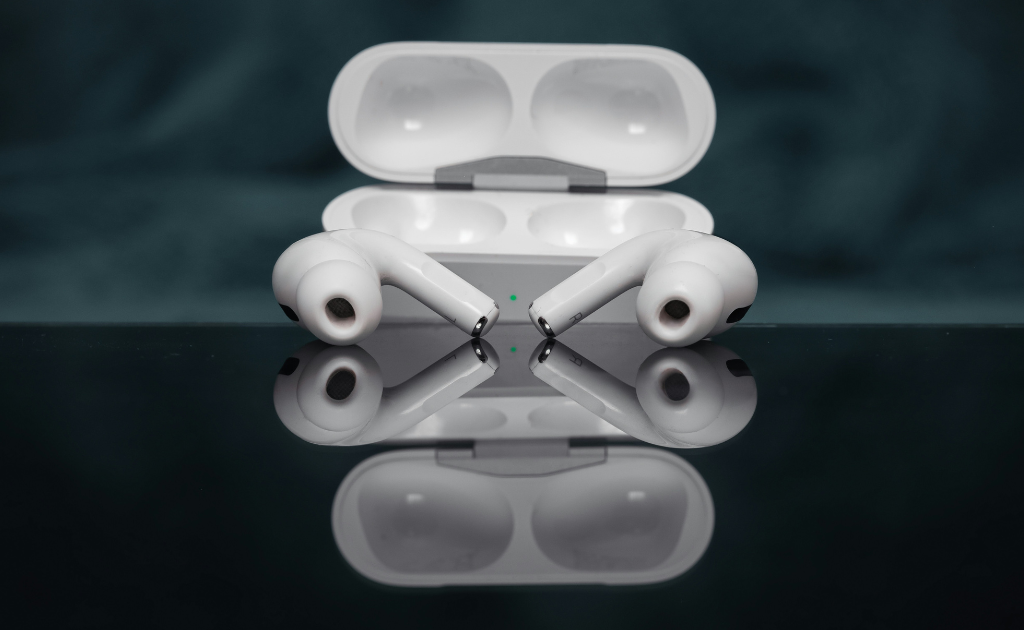
Apple has changed the physical design of the AirPods Pro 3 and introduced foam-infused silicone ear tips in five sizes. Independent comparisons have found the fit comfortable for long sessions, although ear shape still makes this one of the most personal parts of the experience.
And that’s worth emphasizing.
Earbuds can have spectacular specifications and still be terrible for you if they don’t stay in your ears.
A good seal affects almost everything else: bass response, passive isolation, ANC performance, and even how much you need to increase the volume.
So when evaluating AirPods Pro 3, I would put the fit ahead of the heart-rate sensor.
If the new shape works with your ears, a lot of the other improvements suddenly become more useful.
If it doesn’t, none of Apple’s clever software can completely rescue the experience.

The noise cancellation is the feature I’d actually pay for
This is where the AirPods Pro 3 make the strongest case for themselves.
Apple has put a lot of effort into noise cancellation, and current comparisons consistently place the AirPods Pro 3 among the strongest premium earbuds for ANC. SoundGuys’ testing also found the Sony WF-1000XM6 to be extremely competitive, with the two products taking different approaches to the overall experience.
But ANC isn’t just about which pair produces the most impressive laboratory result.
I care more about what happens when you’re actually using them.
A train starts moving.
Someone is talking nearby.
An air conditioner is humming.
You’re walking down a busy street.
The best ANC is the pair that makes you stop thinking about the background noise.
That’s where AirPods Pro 3’s combination of ANC, fit, and Apple’s automatic ecosystem features becomes compelling.
And there’s a bigger point here: you don’t have to use the maximum level of noise cancellation all the time.
Transparency mode remains one of the reasons AirPods feel so natural in everyday use. You can move between isolation and awareness without treating your earbuds like something you need to constantly remove.
Sound quality is good. The bigger question is whether you care about control
AirPods Pro 3 sound good.
That’s not controversial anymore.
The more interesting comparison is with Sony’s WF-1000XM6.
Sony gives you much more control over the sound through its app and a 10-band EQ. Independent testing has also found the Sony particularly strong for people who prioritize sound customization and broader compatibility.
That creates a useful dividing line.
Sony treats the earbuds more like an audio product.
Apple treats them more like an extension of the iPhone.
Neither approach is automatically better.
If you enjoy adjusting EQ settings and experimenting with your sound, I’d lean toward Sony.
If you want to put the earbuds in, start listening, and let the software handle the rest, AirPods make more sense.
And that’s becoming a recurring theme with the Pro 3.
Their biggest advantage isn’t necessarily one specification.
It’s friction.
Apple removes little bits of friction everywhere.

The heart-rate sensor sounds like a gimmick — until you exercise
This is the feature I was most skeptical about.
Why would I need a heart-rate sensor inside earbuds?
Apple’s implementation makes more sense when you think about how people actually exercise.
You’re already wearing the earbuds.
You already have your phone nearby.
So if the earbuds can collect heart-rate data while you’re running or working out, you don’t necessarily need another device for that particular measurement.
Apple says the AirPods Pro 3 can measure heart rate during workouts, although battery life drops to up to 6.5 hours when heart-rate sensing is active.
That’s an important detail that shouldn’t get buried underneath the feature announcement.
The sensor is useful.
But it isn’t free.
You trade some battery endurance for it.
And if you already own an Apple Watch, the feature becomes less compelling because you’re already wearing a much more capable health and fitness device.
For someone who doesn’t wear a watch, though, this is considerably more interesting.
Live Translation is clever, but don’t buy the earbuds for it
Live Translation is one of those features that looks incredible in an Apple presentation.
In real life, the usefulness depends heavily on the situation, supported languages, your phone and Apple’s software ecosystem.
That’s why I wouldn’t make it the reason to purchase AirPods Pro 3.
It’s a bonus.
A potentially useful one, but still a bonus.
The same principle applies to several of Apple’s newer software features.
Technology companies are getting very good at adding features that look impressive in a product announcement.
The harder question is whether you’ll still use them six months later.
For AirPods Pro 3, I suspect most owners will spend more time using:
- ANC
- Transparency mode
- Music
- Podcasts
- Calls
- Siri
- Automatic device switching
Those are the features that actually shape the daily experience.

Battery life is good, but the numbers need context
Apple rates AirPods Pro 3 for up to eight hours of listening with ANC enabled and up to 24 hours when combined with the charging case. With heart-rate sensing during workouts, the individual earbuds are rated for up to 6.5 hours.
On paper, that’s respectable.
But there’s an important distinction between maximum claimed battery life and the battery life you experience after mixing ANC, calls, spatial audio and fitness tracking.
Some independent testing has put real-world listening closer to the five-and-a-half-hour range under particular conditions.
That’s why I wouldn’t call AirPods Pro 3 a battery-life champion.
They’re more of a charge-them-when-you-put-them-away product.
The good news is that five minutes in the case can provide around an hour of listening, according to Apple.
For most people, that matters more than whether the earbuds can technically survive an extremely long listening session.

AirPods Pro 3 vs Sony WF-1000XM6
This is probably the most interesting comparison for anyone spending serious money on wireless earbuds.
The Sony WF-1000XM6 costs considerably more at its regular price, while AirPods Pro 3 launched at $249.99.
But the products aren’t really trying to win in the same way.
| AirPods Pro 3 | Sony WF-1000XM6 | |
|---|---|---|
| Best for | iPhone users | Audio-focused users |
| ANC | Excellent | Excellent |
| Sound customization | Limited | Extensive |
| Ecosystem | Excellent with Apple | Broad compatibility |
| Fitness features | Strong | More conventional |
| Multipoint | Apple ecosystem approach | Yes |
| Price | $249.99 launch price | $329.99 launch price |
Sony has the advantage if you want maximum control over the audio experience.
AirPods have the advantage if you want everything to simply work with your iPhone.
Interestingly, recent real-world discussion isn’t unanimous on which has better ANC or comfort. Some users strongly prefer Sony’s sound and isolation, while others find AirPods more comfortable and easier to live with.
That’s exactly why I wouldn’t declare a universal winner.
The right pair depends on what you value.
The price changes my recommendation
This is where the AirPods Pro 3 have become particularly interesting in August 2026.
Their normal price is $249, but recent promotions have dropped them to around $189, with that price reported across major retailers.
At $249, they’re a premium purchase.
At around $189, the equation changes.
You’re getting strong ANC, Apple’s ecosystem integration, fitness sensing, improved fit, IP57 protection, and a feature set that goes far beyond simply playing music. Apple confirms both the earbuds and case carry the IP57 rating.
So I’d pay much more attention to the actual street price than Apple’s original launch price.
Who should buy AirPods Pro 3?
Buy them if you use an iPhone
This is the easiest recommendation.
The ecosystem integration is a major part of what you’re paying for.
Buy them if ANC matters
They’re among the strongest premium options for blocking outside noise.
Buy them if you exercise without an Apple Watch
The heart-rate sensing becomes much more useful in this scenario.
Buy them if you find them discounted
At around $189, they’re significantly easier to recommend than at full price.
Who should skip them?
Android users
You can physically use AirPods with Android, but you’re giving up much of what makes them special.
If you’re already outside Apple’s ecosystem, Sony’s WF-1000XM6 is the more flexible choice.
Serious audio enthusiasts
If you want extensive EQ control and audio customization, Sony has the stronger proposition.
AirPods Pro 2 owners
This is the difficult upgrade.
If your existing Pro 2 earbuds still fit comfortably, have good battery health, and you’re happy with their ANC, the Pro 3’s new features may not justify immediately replacing them.
The upgrade makes more sense if you specifically want the improved fit, stronger ANC, fitness sensing, or newer feature set.
AirPods Pro 3: Techziano Verdict
The AirPods Pro 3 aren’t revolutionary because Apple discovered how to make earbuds play music.
They’re interesting because Apple keeps pushing the earbuds into areas that used to belong to other devices.
Fitness tracking.
Translation.
Hearing features.
Context-aware software.
And yet, after looking at all of that, I still think the most important parts of the AirPods Pro 3 are much simpler.
They fit well. They cancel noise extremely well. They sound good. They disappear into Apple’s ecosystem.
That’s the foundation.
The heart-rate sensor and Live Translation are interesting extras, but they’re not what I’d use to justify buying them.
The biggest question is therefore not whether AirPods Pro 3 are good.
They are.
The question is whether you’re buying into Apple’s ecosystem.
If you are, the AirPods Pro 3 are one of the easiest premium earbud recommendations to make — particularly when they’re discounted.
If you’re on Android, or you care more about audio customization than seamless convenience, I’d spend the money elsewhere.
And if you already own AirPods Pro 2?
I’d wait for a genuinely good deal before upgrading.
The Pro 3 is an excellent pair of earbuds. It just isn’t an automatic upgrade for everyone.
You will also like:
Check our latest Blogs

Hi, I am the founder of Techziano and a technology enthusiast passionate about AI, software, web development, cybersecurity, and emerging technologies. I creates practical tutorials, software reviews, and technology insights to help readers stay informed and build valuable digital skills.